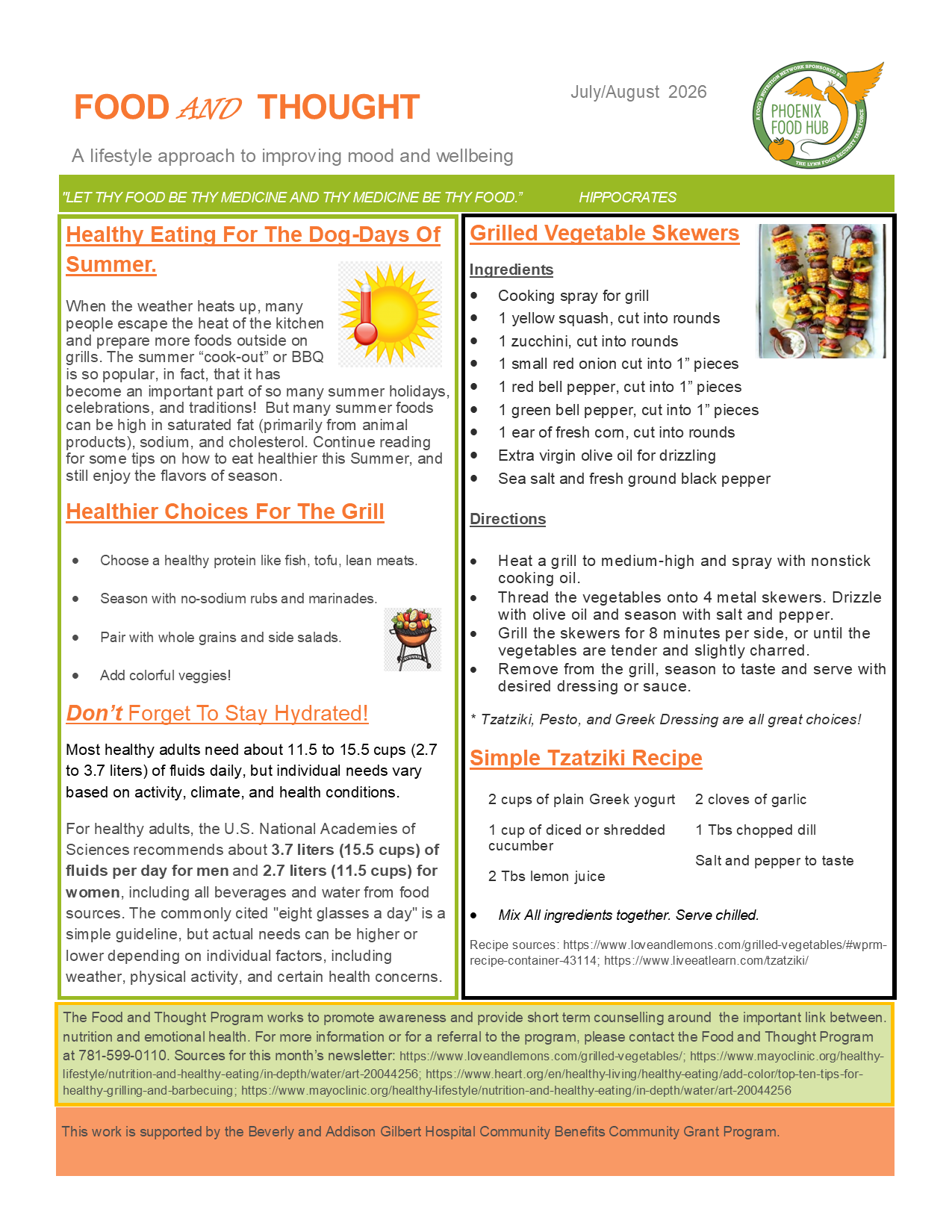
Get summer BBQ tips, hydration advice, & healthy recipes like grilled veggie skewers. Join us for nutritious eating this season!
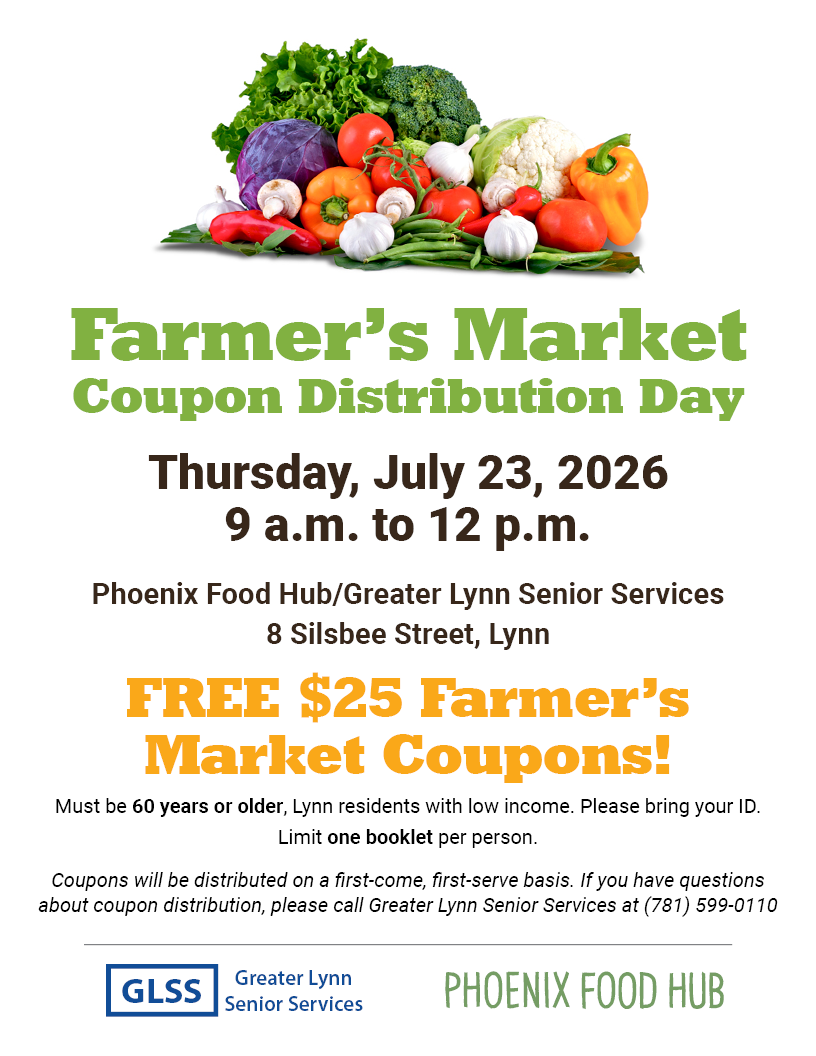
GLSS and Phoenix Food Hub are excited to announce this summer's Farmer's Market Coupon Distribution Day! FREE $25 Farmer’s Market Coupons will be distributed: When: Thursday, July 23, 2026 9 a.m. to 12 p.m. Where: Phoenix Food Hub/Greater Lynn Senior Services 8 Silsbee Street, Lynn Who: Must be 60 years or older, Lynn residents with low income . Please bring your ID. Limit one booklet per person. Booklets contain five $5 coupons. Coupons can be used at the Lynn Farmer's Market and at over 40 other markets and farm stands throughout the North Shore. Coupons will be distributed on a first-come, first-serve basis. If you have questions about coupon distribution, please call Greater Lynn Senior Services at (781) 599-0110
Learn about nutrition assistance & tips for healthy eating. Join us for classes & support to improve your diet today!
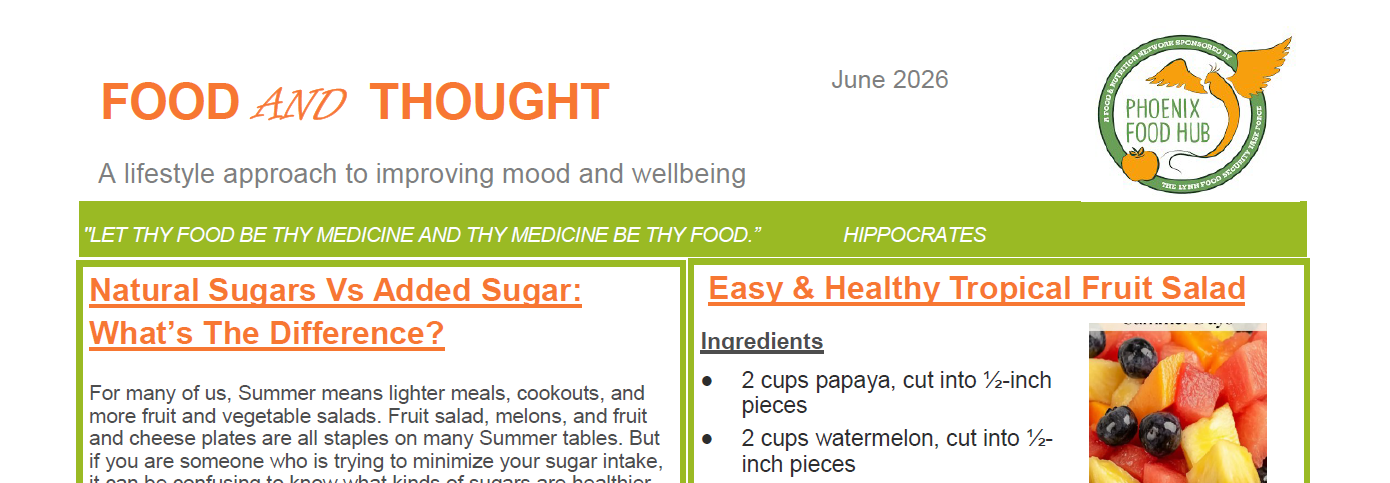
Learn about natural vs. added sugars & healthy eating tips. Join us for nutrition counseling & cooking classes!
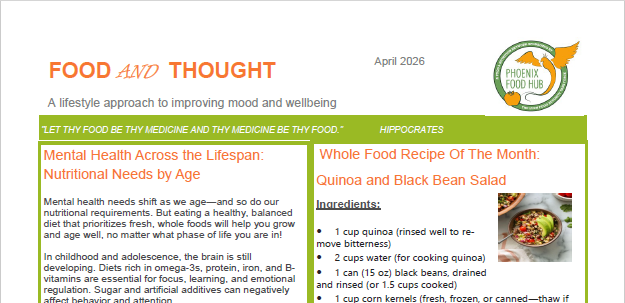
Mental Health Across the Lifespan: Nutritional Needs by Age
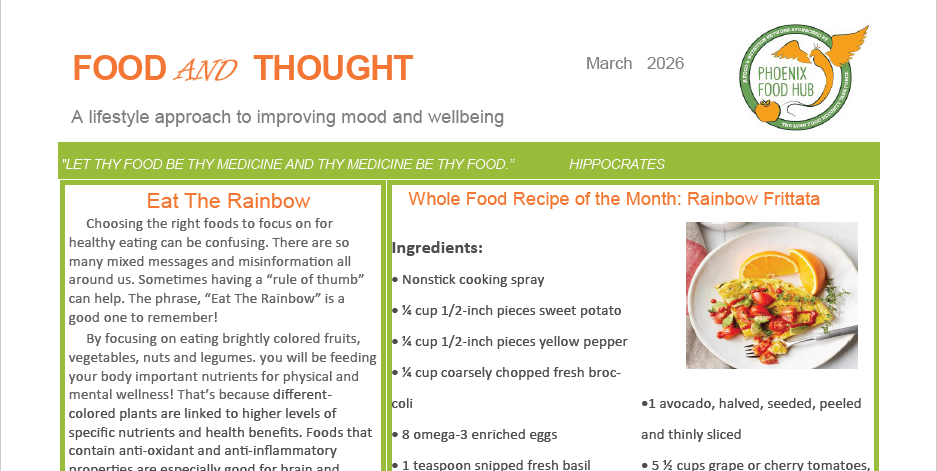
Eat The Rainbow Choosing the right foods to focus on for healthy eating can be confusing. There are so many mixed messages and misinformation all around us. Sometimes having a “rule of thumb” can help. The phrase, “Eat The Rainbow” is a good one to remember! By focusing on eating brightly colored fruits, vegetables, nuts and legumes. you will be feeding your body important nutrients for physical and mental wellness! That’s because different-colored plants are linked to higher levels of specific nutrients and health benefits. Foods that contain anti-oxidant and anti-inflammatory properties are especially good for brain and cognitive health. Red - Anti-inflammatory, antioxidant. May lower the risk of heart disease and certain cancers. Orange and Yellow - Anti-inflammatory, antioxidant. Supports eye health, may help lower the risk of heart disease and cancer. Green - Anti-inflammatory, antioxidant. May lower the risk of cancer and heart disease. Blue and Purple - Anti-inflammatory, antioxidant. May help improve brain function. May help lower risk of heart disease, and certain cancers. Dark Red - Anti-inflammatory, antioxidant. May help support athletic performance through increased oxygen uptake. May help lower the risk of high blood pressure, heart disease and certain cancers. Brown and White - Anti-inflammatory, antioxidant. May help lower risk of heart, colon cancer and other cancers. Whole Food Recipe of the Month: Rainbow Frittata Ingredients: Nonstick cooking spray ¼ cup 1/2-inch pieces sweet potato ¼ cup 1/2-inch pieces yellow pepper ¼ cup coarsely chopped fresh broccoli 8 omega-3 enriched eggs 1 teaspoon snipped fresh basil ½ teaspoon snipped fresh thyme ⅛ teaspoon salt ⅛ teaspoon cracked black pepper 1 avocado, halved, seeded, peeled and thinly sliced 5 ½ cups grape or cherry tomatoes, halved Sriracha sauce (optional) Directions: 1. Preheat oven to 350 F. Coat an ovenproof 10-inch nonstick skillet with cooking spray. Add sweet potato, sweet pepper and broccoli; cook and stir over medium 5 to 7 minutes or until tender. 2. In a medium bowl whisk together eggs, basil, thyme, salt and black pepper. Pour mixture over vegetables in skillet. Cook, without stirring, until mixture begins to set on bottom and around edges. Using a spatula, lift egg mixture so uncooked portion flows underneath. 3. Transfer skillet to oven; cook 5 minutes or until egg mixture is set. Remove from oven. Let stand 2 minutes. Top servings with avocado and tomatoes. Drizzle with sriracha if using. https://www.eatingwell.com/gallery/12297/insta-worthy-rainbow-recipes/