Food and Thought Newsletter - May 2026

June 3, 2026

Share this article

Pesticides, Mental Health, and You!


As the Summer months are approaching, many of us will change our eating patterns to include more fresh fruits and vegetables. Salads, grilled vegetables, corn on the cob, and fresh melons will grace many home and picnic tables. And this is GOOD! However, there is something to be aware of when preparing these Summer dishes; the presence of dirt, bacteria and even pesticide residue on any non-organic fresh food item.


In the United States, pesticides are commonly used in agriculture to protect crops from pests, diseases, and weeds, ensuring higher yields, better quality produce, and food security. But the downside to pesticide use is the short and long-term effects pesticides can have on our physical and emotional wellbeing. Pesticide exposures have been linked to causing and exacerbating depression, anxiety, bi-polar disorder, aggression, psychosis, dementia, ADHD, and more.


There are some things you can do, however, to protect yourself and minimize your exposure to these residual chemicals.


Tips For Reducing & Avoiding Pesticides on Produce

· Whenever possible, buy organic. Even foods marked “pesticide free” may not actually be pesticide free. But organic foods are regulated and monitored.

· Run produce under cold water for 15 to 20 seconds before using. For heads of lettuce or other greens, turn them upside down after washing to drain. Use a soft brush to scrub the outside skin of items like apples, carrots, and potatoes.

· There’s no need for anything other than water. There’s little evidence that soaps or special rinses wash away pesticide residues.

· Peeling fruits and vegetables will not remove all pesticides, but will remove a lot of important nutrients and fiber. It’s better to wash them thoroughly!

· Produce from farmer’s markets may not be organic and may contain pesticides. Never assume, and always ask!


Whole Food Recipe Of The Month: Grilled Eggplant & Asparagus Salad


Ingredients

· 32 asparagus spears, trimmed

· 2 small Italian eggplants, cut into 1/2-inch thick spears

· 4 tomatoes, sliced

· ½ teaspoon salt, or as needed

· 3 tablespoons olive oil

· 2 tablespoons balsamic vinegar

· salt and ground black pepper to taste

· 6 cups chopped romaine lettuce

· 2 cups chopped endive

· 2 tablespoons shredded Parmesan cheese, or more to taste


Directions

· Preheat grill for medium heat and lightly oil the grate.

· Toss asparagus, eggplant, and tomatoes with about 1/2 teaspoon salt.

· Arrange vegetables on the preheated grill; cook until tender, 5 to 7 minutes per side.

· Whisk olive oil and vinegar in a bowl until smooth; season to taste with salt and black pepper. Toss romaine, endive, and dressing together in a large bowl.

· Serve grilled vegetables atop the dressed lettuce mixture; sprinkle with Parmesan cheese.

Recent Posts

June 2, 2026
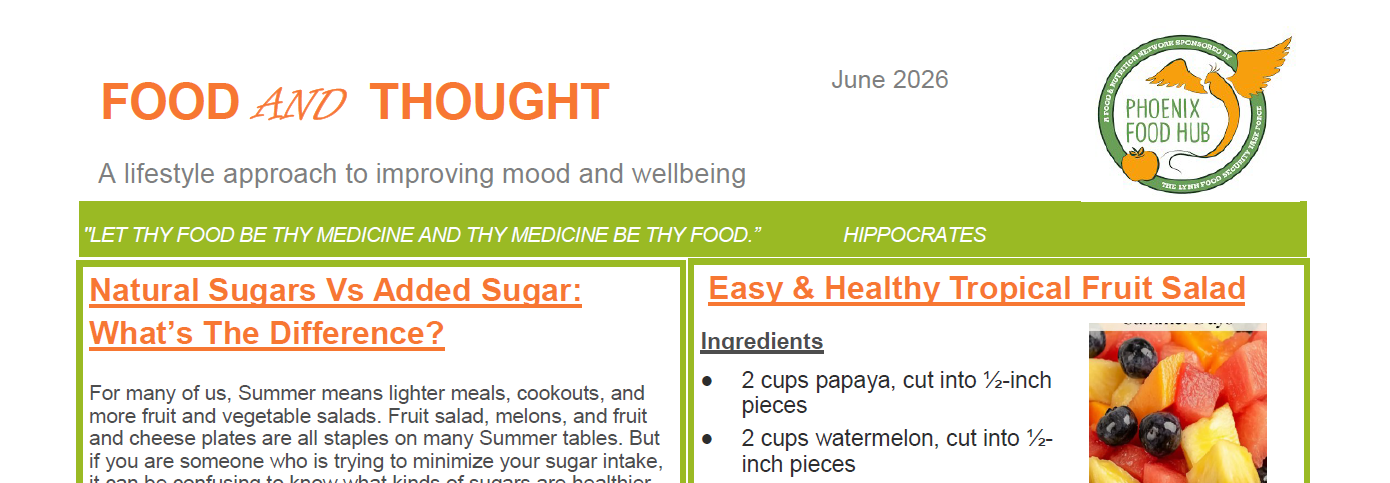
Natural Sugars Vs Added Sugar: What’s The Difference? For many of us, Summer means lighter meals, cookouts, and more fruit and vegetable salads. Fruit salad, melons, and fruit and cheese plates are all staples on many Summer tables. But if you are someone who is trying to minimize your sugar intake, it can be confusing to know what kinds of sugars are healthier and which ones to avoid or minimize. This is the natural versus added sugar debate! While many natural foods do contain sugars—for example fruits and dairy products—they may also have health benefits associated with them. That’s because these foods also often contain additional vitamins, minerals, fiber, and anti-oxidant and anti-inflammatory properties. These added healthful properties aid in digestion and slow down the absorption of sugar into the blood stream, thus decreasing the sharp spikes associated with other, non-natural, added sugars. They carry a “low glycemic index”. Added sugar refers to any sugar introduced during food processing, preparation, or at the table. This includes table sugar (sucrose), high-fructose corn syrup, honey, maple syrup, and sugars from concentrated fruit or vegetable juices. Unlike natural sugars, added sugars do not come with fiber, vitamins, or minerals, and consuming them in excess can contribute to weight gain, insulin resistance, diabetes, and heart disease. While natural sugars such as honey and maple syrup have a lower glycemic index and contain some nutrients, they should still be consumed in moderation, just like refined sugars. So, it is best to stick with sugars that occur naturally in foods. Rule of Thumb: Whole fruits remain the best sugar source since they offer fiber and essential vitamins. Did You Know? Americans consume more than 17 teaspoons of added sugar each day. This far exceeds the recommendation of limiting daily added sugar intake to nine teaspoons (36 grams) for men and six teaspoons (25 grams) for women. Easy & Healthy Tropical Fruit Salad Ingredients · 2 cups papaya, cut into ½-inch pieces · 2 cups watermelon, cut into ½-inch pieces · 2 cups pineapple, cut into ½-inch pieces · ½ cup blueberries · ½ cup grapes, halved Directions · Cut pineapple, watermelon, and papaya into uniform ½-inch pieces. · Slice grapes in half. · In a large bowl, gently combine all fruits together. · Refrigerate for at least 1 hour to let flavors meld. · Stir gently before serving and enjoy chilled. How much Sugar is in…? 1 tsp. table sugar -- 4 grams added sugar 1 12 oz can of Coca Cola -- 39 grams added sugar 1 brownie (from a mix) -- 16 grams added sugar 1 cup of watermelon -- 9 grams natural sugar 1 cup of strawberries -- 7 grams natural sugar 1 kiwi fruit -- 6 grams natural sugar
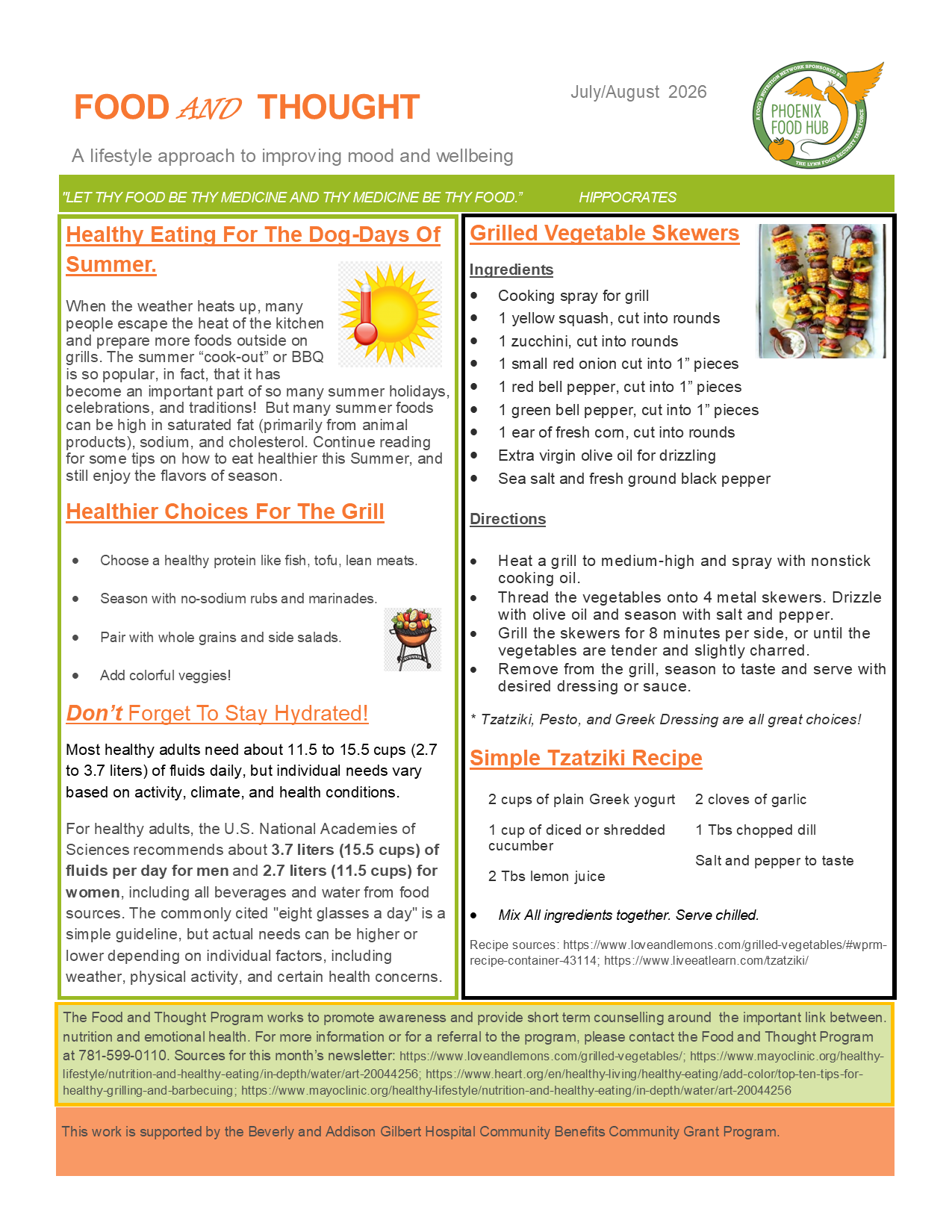
A monthly newsletter titled
April 3, 2026
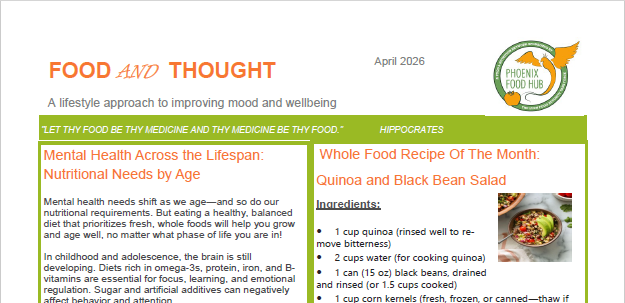
Mental Health Across the Lifespan: Nutritional Needs by Age
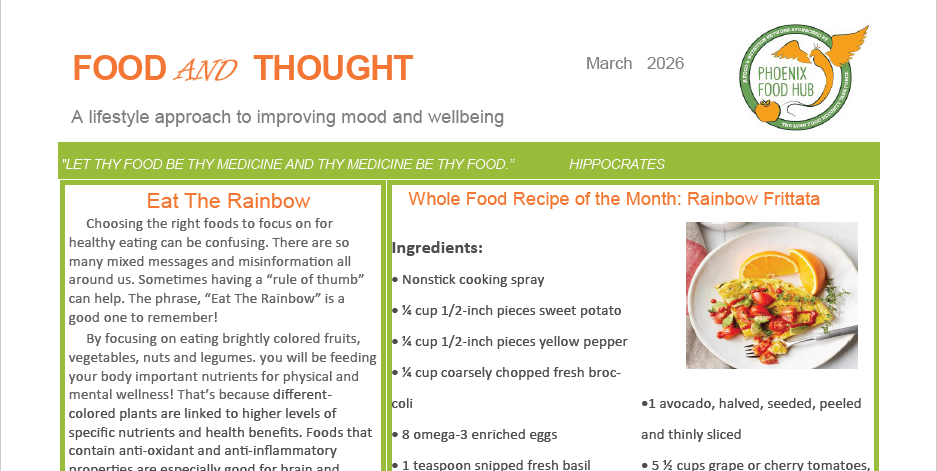
Newsletter with the title
February 26, 2026
Eat The Rainbow Choosing the right foods to focus on for healthy eating can be confusing. There are so many mixed messages and misinformation all around us. Sometimes having a “rule of thumb” can help. The phrase, “Eat The Rainbow” is a good one to remember! By focusing on eating brightly colored fruits, vegetables, nuts and legumes. you will be feeding your body important nutrients for physical and mental wellness! That’s because different-colored plants are linked to higher levels of specific nutrients and health benefits. Foods that contain anti-oxidant and anti-inflammatory properties are especially good for brain and cognitive health. Red - Anti-inflammatory, antioxidant. May lower the risk of heart disease and certain cancers. Orange and Yellow - Anti-inflammatory, antioxidant. Supports eye health, may help lower the risk of heart disease and cancer. Green - Anti-inflammatory, antioxidant. May lower the risk of cancer and heart disease. Blue and Purple - Anti-inflammatory, antioxidant. May help improve brain function. May help lower risk of heart disease, and certain cancers. Dark Red - Anti-inflammatory, antioxidant. May help support athletic performance through increased oxygen uptake. May help lower the risk of high blood pressure, heart disease and certain cancers. Brown and White - Anti-inflammatory, antioxidant. May help lower risk of heart, colon cancer and other cancers. Whole Food Recipe of the Month: Rainbow Frittata Ingredients: Nonstick cooking spray ¼ cup 1/2-inch pieces sweet potato ¼ cup 1/2-inch pieces yellow pepper ¼ cup coarsely chopped fresh broccoli 8 omega-3 enriched eggs 1 teaspoon snipped fresh basil ½ teaspoon snipped fresh thyme ⅛ teaspoon salt ⅛ teaspoon cracked black pepper 1 avocado, halved, seeded, peeled and thinly sliced 5 ½ cups grape or cherry tomatoes, halved Sriracha sauce (optional) Directions: 1. Preheat oven to 350 F. Coat an ovenproof 10-inch nonstick skillet with cooking spray. Add sweet potato, sweet pepper and broccoli; cook and stir over medium 5 to 7 minutes or until tender. 2. In a medium bowl whisk together eggs, basil, thyme, salt and black pepper. Pour mixture over vegetables in skillet. Cook, without stirring, until mixture begins to set on bottom and around edges. Using a spatula, lift egg mixture so uncooked portion flows underneath. 3. Transfer skillet to oven; cook 5 minutes or until egg mixture is set. Remove from oven. Let stand 2 minutes. Top servings with avocado and tomatoes. Drizzle with sriracha if using. https://www.eatingwell.com/gallery/12297/insta-worthy-rainbow-recipes/
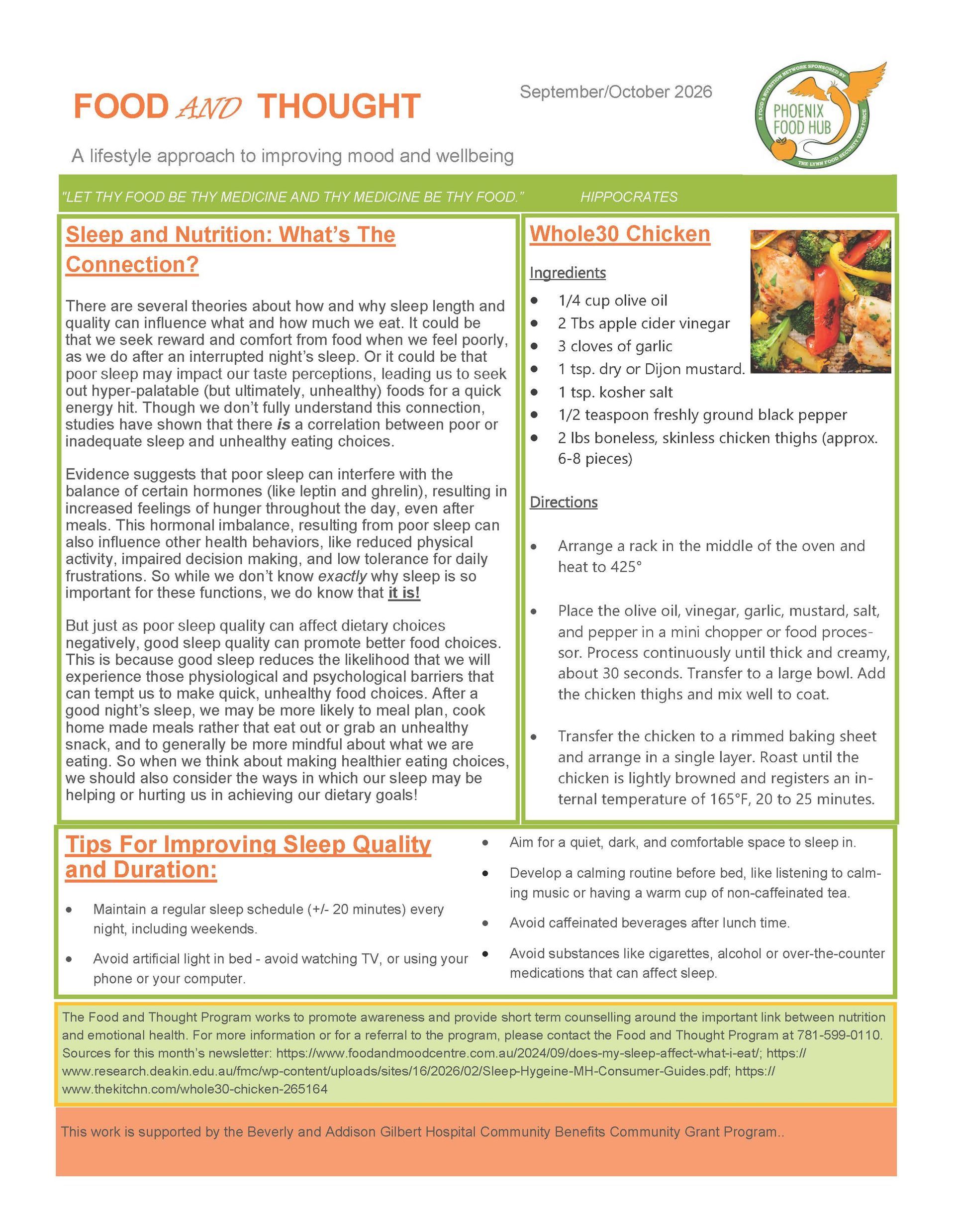
Newsletter titled
February 10, 2026
Food and Mental Health: Eat Good, Feel Good Because our bodies and our brains require many different nutrients to function properly and to feel good, what we eat is critically important. There is a growing body of research studying the impact of diet on emotional health and wellbeing, and increasingly showing that what we eat can influence our moods, thoughts and emotional wellbeing—both positively and negatively. Below are just some of the ways that nutrients can impact our emotional health. Magnesium (beans, nuts, dark chocolate) Calms the nervous system, reduces anxiety and improves sleep. B vitamins (leafy greens, eggs, poultry) Crucial for maintaining mental energy, reducing brain fog and supporting mood regulation Iron (beans, spinach, red meat) Can improve focus, mental clarity and cognitive function, especially in individuals with ADHD Zinc (pumpkin seeds, seafood, eggs) Supports dopamine production and can enhance focus, motivation and hyperactivity — key areas often affected by ADHD Whole Food Recipe of the Month Perfect for breakfast or a healthy snack, this chia seed pudding with berries is a game-changer Chia Seed Pudding With Berries Ingredients · 1/4 cup chia seeds · 1 cup almond milk (or any milk you prefer) · 1 tbsp maple syrup (adjust to taste) · 1/2 tsp vanilla extract · 1/2 cup mixed berries (fresh or frozen) Instructions · In a medium bowl, combine chia seeds, almond milk, maple syrup, and vanilla extract. Stir well to avoid clumps. · Let the mixture sit for 5 minutes, then stir again. This prevents the chia seeds from settling at the bottom. · Cover the bowl and refrigerate for at least 4 hours, or overnight. The pudding will thicken as it chills. · Before serving, give the pudding a good stir. If it’s too thick, add a splash of almond milk to loosen it up. · Top with mixed berries right before eating for a fresh, juicy contrast to the creamy pudding. · Creamy with a slight crunch from the chia seeds, this pudding is a delight. Try layering it with granola for extra texture or drizzling with honey for added sweetness. Try These Winning Combinations Oats and bananas Turkey sandwich Provide carbohydrates and tryptophan, which help your brain produce serotonin. This supports steadier mood, better sleep and emotion regulation. Beans and bell peppers Spinach salad with clementine slices Vitamin C helps your body absorb more iron, which can boost energy and focus. Yogurt and bananas Combines probiotics and prebiotics to support gut health, digestion and mood. Salmon salad with chia seeds Egg and vegetable scramble Rich in omega-3s and choline, these nutrients support brain function, concentration and emotional balance.
Food and Thought newsletter January 2026
December 31, 2025
Multiple Benefits Of Eating More Whole Foods. For many of us, making changes to our eating patterns is a common New Year’s goal. For some it’s about improving health; for others, it’s about weight loss. But whatever your reason for trying to eat healthier, adding more whole foods to your diet can help you reach your goals. Whole foods are foods in their most natural state, minimally processed, and free from added sugars, fats, and preservatives. Whole foods include fresh fruits, vegetables, whole grains, legumes, nuts, and lean proteins. Whole foods offer rich nutrients, fiber, and antioxidants that support better digestion, weight management, and reduced risk of chronic diseases. So adding more of them and reducing processed foods in your diet, will help no matter what your nutritional goals may be! And with the new year upon us, there is no better time to start making positive changes! Whole Food Recipe of the Month - Sweet potatoes – 2 medium, peeled and diced into ½-inch cubes – Olive oil – 2 tbsp – Black beans – 1 (15-oz) can, drained and rinsed – Corn tortillas – 8 – Avocado – 1, sliced – Lime – 1, cut into wedges – Salt – ½ tsp – Cumin – 1 tsp – Chili powder – 1 tsp 1. Preheat your oven to 400°F and line a baking sheet with parchment paper. 2. In a large bowl, toss the diced sweet potatoes with 1 tbsp of olive oil, ½ tsp of salt, 1 tsp of cumin, and 1 tsp of chili powder until evenly coated. 3. Spread the seasoned sweet potatoes in a single layer on the prepared baking sheet. 4. Roast the sweet potatoes in the preheated oven for 20-25 minutes, or until they are fork-tender and lightly browned around the edges. 5. While the sweet potatoes are roasting, heat the remaining 1 tbsp of olive oil in a skillet over medium heat. 6. Add the drained and rinsed black beans to the skillet and cook for 5-7 minutes, stirring occasionally, until they are warmed through and slightly softened. 7. Warm the corn tortillas in a dry skillet over medium heat for 20-30 seconds per side. 8. Assemble the tacos by placing a spoonful of roasted sweet potatoes and black beans onto each warmed tortilla. 9. Top each taco with sliced avocado and a squeeze of fresh lime juice from the wedges. 10. Serve immediately while warm. Tips For Adding Whole Foods To Your Diet How to Add Whole Foods Start with Swaps: Replace white bread with whole wheat, white rice with brown rice or quinoa, and sugary cereals with oatmeal. Embrace Fruits & Veggies: Aim for a rainbow of colors daily, adding a handful of spinach to smoothies or berries to yogurt. Choose Whole Grains: Opt for oats, barley, farro, and whole- grain pasta. Incorporate Lean Proteins: Include fish, chicken, beans, lentils, tofu, and eggs. Snack Smart: Grab nuts, seeds, or a piece of fruit instead of chips or cookies. Cook at Home: Prepare meals using fresh ingredients to control what goes in them. Shop the Perimeter: Focus on the fresh produce, dairy, and meat sections, as processed items are usually in the center aisles. What to Limit Processed Foods: Cut back on packaged snacks, sugary drinks, and fast food. Refined Carbs: Reduce white flour, white sugar, and similar items. Added Sugars & Unhealthy Oils: Be mindful of hidden sugars and trans fats. Sources for this month’s newsletter have been taken from: https://www.google.com/search?q=Adding+whole+foods+to+your+diet&sca_esv=07b4a2215fc3982c&source=hp&ei=1wpDaZrcA_if5NoPqa29iAw&iflsig=AOw8s4IAA AAAaUMY59d6uvIx-; https://goodhealthrecipes.com/whole-food-diet-recipes/ The Food and Thought Program works to promote awareness and provide short term counselling around the important link between. nutrition and emotional health. For more information or for a referral to the program, please contact the Food and Thought Program This work is supported by the Beverly and Addison Gilbert Hospital Community Benefits Community Grant Program.
Food and Thought newsletter December 2025
December 2, 2025
Healthy Eating For The New Year: What Are Your Goals?
Show More